
Oral Gum Care in JP Nagar
Healthy gums hold your teeth in place. If your gums bleed, recede or look uneven, we can find out why and treat it, using gum surgery or laser therapy where it helps.
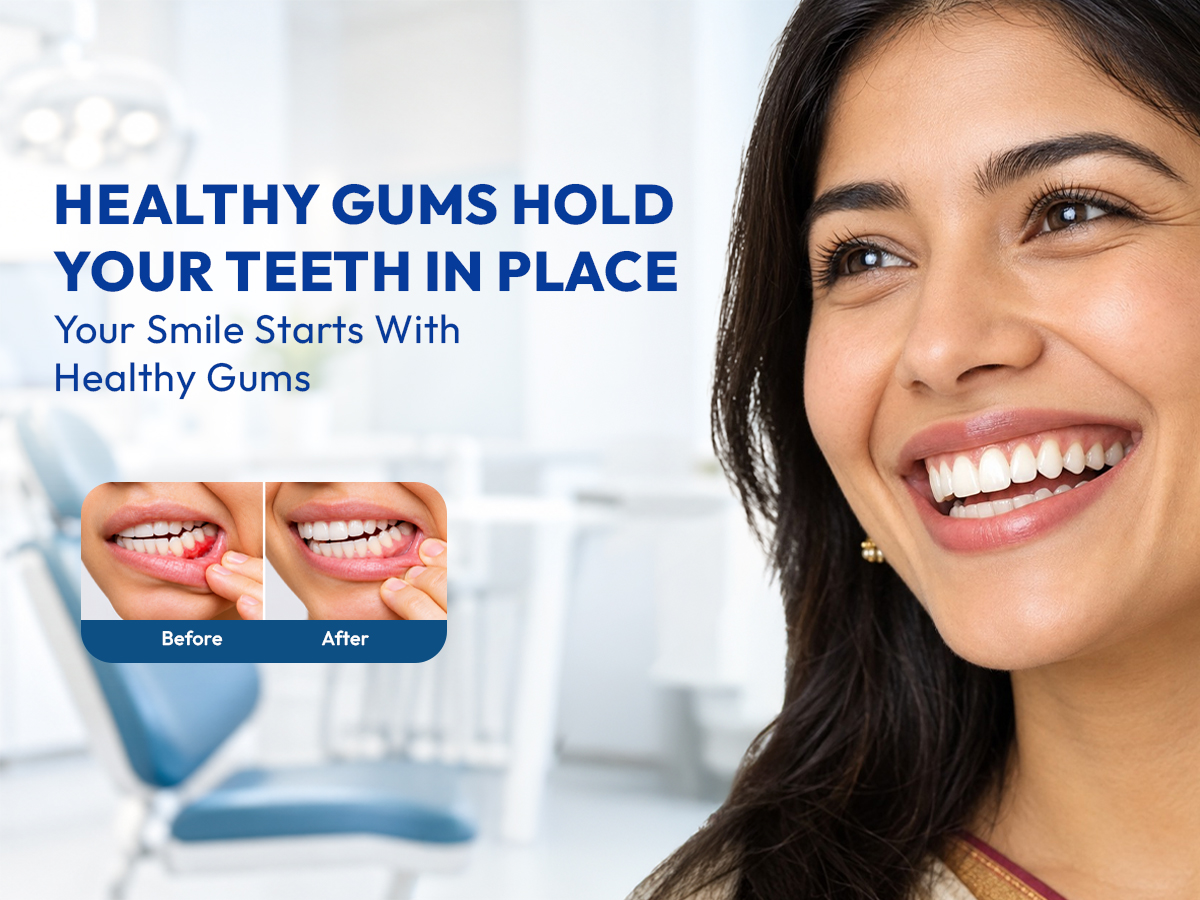
Signs of gum problems
- Gums that bleed when you brush or floss
- Red, swollen or tender gums
- Persistent bad breath
- Gums pulling away from the teeth, so teeth look longer
- Teeth that feel loose or have moved
- A smile that shows a lot of gum
Bleeding gums aren't normal. They are a common first sign of gum inflammation, and early treatment stops it from getting worse.
Gingival inflammation
Gingival inflammation is the earliest stage of gum disease. It happens when plaque builds up along the gum line and irritates the gums, which can then look red or swollen and bleed when you brush or floss. Smoking, hormonal changes, some medicines and conditions such as diabetes can make it more likely.
At this stage the bone supporting your teeth is not affected, and the inflammation can usually be reversed with a professional clean and good daily cleaning at home. Left untreated, it can progress to periodontitis, so it is worth having bleeding gums checked early.
Periodontitis
Periodontitis is a more advanced form of gum disease. The inflammation spreads below the gum line and affects the tissue and bone that hold your teeth in place. Gaps called pockets form between the teeth and gums, gums may recede, and teeth can eventually become loose. It often causes little pain in the early stages, which is why regular check-ups matter.
We diagnose it by measuring the depth of the pockets around each tooth and taking X-rays. Periodontitis can't be reversed, but it can be controlled. Treatment usually starts with a deep clean of the teeth and roots, and some cases need further treatment, including surgery. Regular maintenance visits are an important part of keeping it under control.
Why gum health matters
Gum disease starts as inflammation and can progress to damage the bone that supports your teeth. It is a major cause of tooth loss in adults, and it often causes little pain until it is advanced. Treating it early protects your teeth and your overall mouth health.
Questions about Oral Gum Care? Talk to our team.
Where treatment starts
Most gum treatment begins without surgery. A professional deep clean removes plaque and tartar from above and below the gum line, and we show you how to clean your teeth effectively. Early gum inflammation can often be reversed this way. See our teeth cleaning and check-ups page.
When gum surgery is needed
If deep cleaning isn't enough, or if your gums need reshaping, your dentist may suggest a gum procedure. Depending on your case, this can include:
- Gum grafting, to cover exposed roots when gums have receded
- Gum contouring or crown lengthening, to even out the gum line, correct a gummy smile or expose more tooth before a crown or filling
These procedures are done under local anaesthesia.
Flap surgery (pocket reduction)
Flap surgery may be suggested when deep pockets remain after a deep clean and can't be kept clean at home. Under local anaesthesia, the gum is gently lifted back like a flap so that we can clean tartar and infected tissue from the roots. Where needed, the bone is reshaped, and the gum is then repositioned and stitched.
The aim is to reduce the depth of the pockets, which makes your teeth easier to clean and helps stop the disease from progressing. Expect some soreness and swelling for a few days. We will give you instructions on soft foods, medicines and gentle cleaning, and we will see you for a follow-up to check healing and remove stitches if needed.
What is laser gum therapy?
Laser gum therapy uses a dental laser to treat gum tissue. In suitable cases it can be used to clean infected gum pockets or reshape the gum line, and some patients find it more comfortable than traditional gum surgery. A laser is one tool among several. Whether it's right for you depends on your gums and your condition, and we will tell you if another approach would be better.
What to expect
- Gum assessment. We measure the gum pockets around each tooth and take X-rays.
- Your plan. We explain what we found and the treatment we recommend.
- Treatment under local anaesthesia, so you shouldn't feel pain during it.
- Aftercare. We tell you what to eat, how to clean the area and which medicines to take.
- Follow-up and maintenance. Regular visits keep your gums healthy.
What affects the cost?
The cost depends on how many teeth or areas are involved, the type of procedure and how severe the problem is. We can explain the likely cost after your gum assessment. Book an appointment to get started.
Frequently asked questions
Does gum surgery hurt?
It's done under local anaesthesia, so you shouldn't feel pain during the procedure. The area can be sore for a few days afterwards.
Is laser gum treatment better than traditional gum surgery?
Not for every case. Laser can be a good option for some conditions, and traditional methods are better for others. Your dentist will recommend what suits you.
Can receding gums grow back?
Gum tissue doesn't grow back by itself, but gum grafting can cover exposed roots, and treating the cause stops the recession from getting worse.
How long does recovery take?
Usually from a few days to a couple of weeks, depending on the procedure. We'll give you clear aftercare instructions.
Can gum disease be cured?
Early gum inflammation can be reversed. Advanced gum disease can be controlled but needs regular maintenance to stay that way.
Is flap surgery painful?
The area is numbed, so you shouldn't feel pain during the procedure. Soreness afterwards is common and usually settles within days.
Can periodontitis be cured?
It can't be reversed, but it can be controlled with professional treatment, good home care and regular maintenance visits.
Talk to us about Oral Gum Care
Call us or message us on WhatsApp to arrange a consultation. We will examine you and explain your options before anything begins.