
Root canal treatment in JP Nagar, Bengaluru
Root canal treatment removes infection from inside a tooth so that you can keep the tooth instead of losing it. Here is what to look out for and what to expect.
What is root canal treatment?
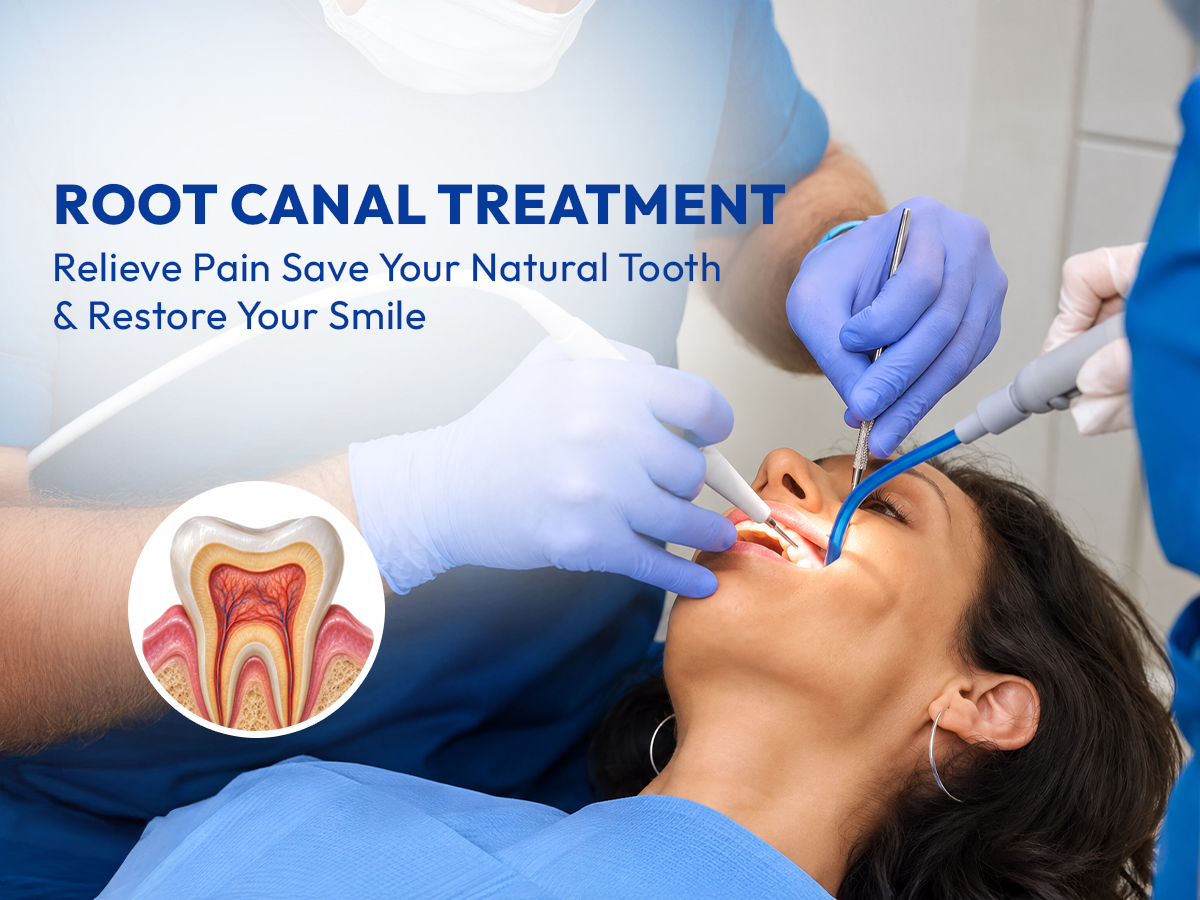
Inside every tooth is a soft tissue called the pulp. If decay, a crack or an injury lets bacteria reach it, the pulp can become inflamed or infected. Root canal treatment removes the damaged pulp, cleans the inside of the tooth, and fills and seals it so that the infection doesn't return.
Signs you may need a root canal
- Severe toothache, especially when you chew or press on the tooth
- Sensitivity to hot or cold that lingers after the drink or food is gone
- Swelling or tenderness in the gum near the tooth
- A tooth that has darkened
- A small bump on the gum, which can be a sign of an abscess
Sometimes an infected tooth causes no pain at all, so only an examination and an X-ray can tell you for sure.
If you have facial swelling, a fever or severe pain, call us the same day.
Questions about root canal treatment? Talk to our team.
What happens during treatment
- Examination and X-ray to confirm the problem and show the shape of the root canals.
- Local anaesthesia so that the tooth and the area around it are numb.
- Cleaning the canals. We make a small opening, remove the infected pulp and clean and shape the canals.
- Filling and sealing. The canals are filled and the tooth is sealed to keep bacteria out.
- Restoring the tooth. Most root canal-treated teeth need a crown to protect them from breaking.
Treatment is often completed in one or two visits, depending on the tooth and how severe the infection is.
Is a root canal painful?
The treatment is done under local anaesthesia, so it should feel much like having a filling. The pain that brings most people in comes from the infection, and treatment is what relieves it. The tooth can feel tender for a few days afterwards, and we will tell you how to manage that.
Aftercare
- Avoid chewing hard food on the treated tooth until it has its final filling or crown
- Take any medicines exactly as prescribed
- Keep brushing and flossing as normal
- Return for your crown or final restoration on time
What affects the cost of a root canal?
The cost depends on which tooth is being treated, because back teeth have more canals than front teeth, how severe the infection is, whether it is a repeat treatment and what restoration the tooth needs afterwards. We can explain the likely cost after we examine you. Book an appointment or call us.
Frequently asked questions
Why save the tooth instead of pulling it?
Your natural tooth is usually the best option for chewing and for keeping your other teeth in place. If a tooth can't be saved, we will explain the alt=""ernatives, including dental implants.
How long does a root canal take?
Often one or two visits. Each visit commonly lasts around an hour, though this depends on the tooth.
Will I need a crown?
Usually, yes, particularly for back teeth, because a treated tooth is more likely to fracture without one.
What if I ignore the pain?
Infection can spread to the bone and surrounding tissue and cause swelling and more serious problems. It is best to be seen early.
Can a root canal be done on a child's tooth?
Children's baby teeth can have similar treatments in some situations. Our children's dentist will advise on the right approach.

Care with Dr. Ashwin Surana M
Conservative Dentistry & Endodontics
Focuses on microscope-assisted endodontics, complex root canal treatment, retreatment, and minimally invasive restorative approaches.
Talk to us about root canal treatment
Call us or message us on WhatsApp to arrange a consultation. We will examine you and explain your options before anything begins.